Sustainable Energy: The Inevitable Shift
Sustainable energy is going through a bit of a rough patch in the U.S. But this changes NOTHING.
There’s political back-and-forth, shifting incentives, and growing tension between the urgency of climate goals and the complexity of execution on the ground. Headlines swing between optimism and slowdown. Some call it a clean energy boom. Others call it a pause.
But even with all the mixed signals, the shift is still happening.
Because when a transition starts to make real sense .. when it’s better for your wallet, your resilience, your business, your family, your community and the planet…it becomes bigger than any one delay. You can try to slow it down. But you can’t stop it.
Clean energy has already crossed that line. And it’s following the same pattern we’ve seen before — in other technologies and industries that started small, met resistance, and then changed everything.
Smartphones: from skepticism to saturation
Remember when touchscreens were seen as a gimmick? When keypads felt essential? BlackBerry was everywhere — and it was hard to imagine that changing. But once people experienced what a smartphone could actually do — apps, maps, email, internet — it quickly stopped being optional. The shift was fast, and permanent. Now, our phones are basically extensions of us.
It didn’t happen because everyone agreed. It happened because it worked better.
The Internet: Quietly reshaping everything
At first, the internet was something you “logged into.” It was clunky and slow. Businesses weren’t sure what to do with it. Some dismissed it entirely. But over time, it crept into everything. Communication. Commerce. Entertainment. Learning. News. Entire industries were rebuilt — or left behind. It didn’t happen all at once, but when it did, it felt obvious.
And now? You don’t go online. You’re just always connected. The internet became the infrastructure for everything else.
EVs: Gaining ground, regardless of the noise
EVs are having their own growing pains — uneven adoption, infrastructure gaps, confusing policy shifts. But zoom out, and the picture is clear. Battery prices are falling. Charging stations are expanding. Automakers are all-in. New models are more affordable, more practical, and genuinely desirable. People are happily adopting it and the biggest car makers are investing in EVs.
We’ve likely already passed peak internal combustion. What we’re watching now isn’t a debate — it’s rollout. The shift to electric isn’t linear, but it’s locked in.
AI: Already embedded in everything
AI didn’t arrive with a bang. It quietly started improving things behind the scenes: search engines, recommendations, speech recognition. Now it’s writing code, designing products, drafting emails, managing fleets, optimizing grids. It’s not future tech anymore. It’s baked into how things work. Everyday it gets questioned but AI is marching on.
Whether people love it or worry about it — the shift is underway. It’s already part of the operating system.
Cloud & software: the silent backbone of modern life
Cloud computing didn’t make headlines when it began. It was just a smarter, cheaper, more flexible alternative to physical servers. And so, one by one, companies moved. Software ate the world. And today, most businesses — even the small ones — run on some form of cloud infrastructure. Not because they had to. But because it made more sense.
Energy is moving in the same direction. Intelligent software is now managing how we store, use, and share power — deciding when to charge batteries, when to draw from solar, when to sell back to the grid.
It’s not flashy, but it’s changing everything behind the scenes.
And now, ENERGY
This is where we are now with clean energy. It’s no longer “emerging.” It’s maturing.
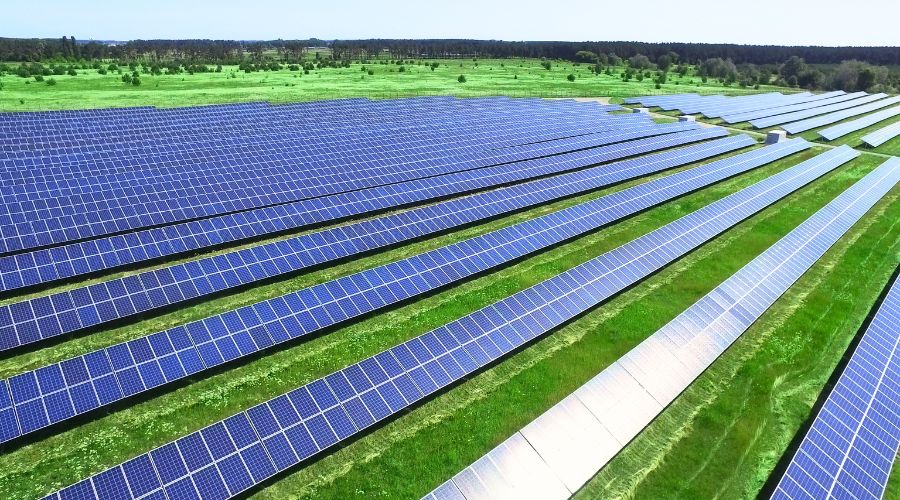
Solar is one of the cheapest energy sources in the world. Battery storage is scaling. Microgrids are offering local resilience and grid relief. And energy management software is making it all work more intelligently.
It’s not perfect. Permitting is slow. Transmission upgrades are lagging. Politics can get in the way.
But clean, distributed, intelligent energy just makes sense — economically, operationally, and environmentally. And when something makes sense, it eventually breaks through.
So where does that leave us?
We’re already inside the transition. It’s not something on the horizon. It’s happening all around us.
Like every major shift before it — smartphones, the internet, AI, EVs — it’s not about “if” anymore. It’s about how fast, and who’s ready.
The change won’t be smooth or evenly distributed. But it will keep moving — because it works.
And once that happens, you can’t stop it.
You can question it. You can delay it. But it’s coming anyway.
Because some things are just inevitable.